Apostrophe Catastrophe: A Field Guide to the Punctuation Marks Destroying Grocery Store Signs Everywhere
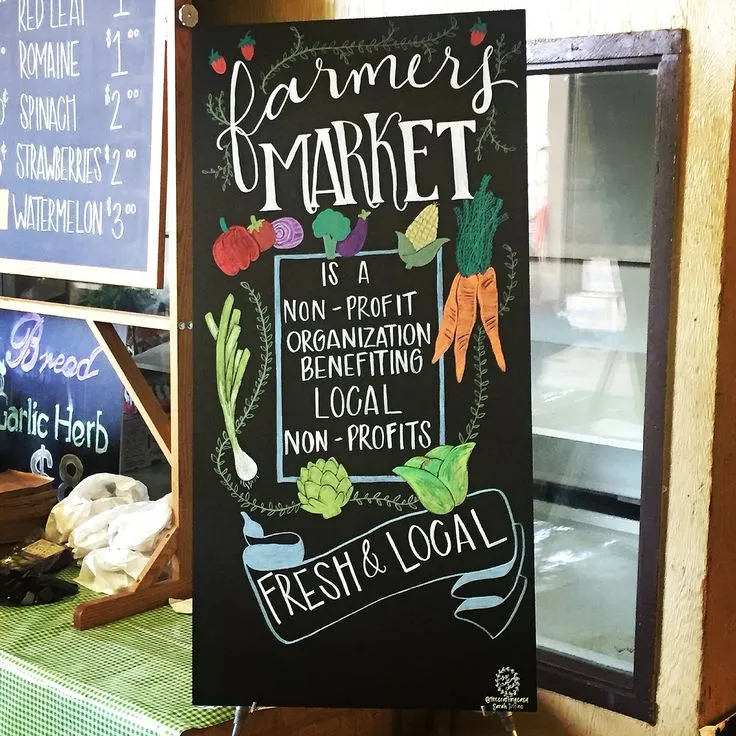
Photo: grocery store produce sign with handwritten label chalkboard, via i.pinimg.com
Picture this: You're at your local grocery store, cart squeaking down the produce aisle, when a handwritten sign stops you cold. It reads: "Avocado's — 3 for $5."
You wince. You look away. You look back, hoping you misread it. You didn't.
Somewhere across town, an English teacher is crying into their red pen, and they don't even know why.
Welcome to what grammarians have quietly started calling the Apostrophe Apocalypse — a slow-motion punctuation disaster playing out on chalkboards, cardboard signs, and hand-lettered banners at small businesses all across America. The apostrophe is one of the most misunderstood marks in written English, and nowhere is that misunderstanding more gloriously, painfully on display than in the signage of your average neighborhood grocery store.
Let's go on a little field trip.
The Crime Scene: What We Actually Found Out There
We didn't have to look hard. A casual stroll through any strip mall in the US will yield a greatest-hits collection of apostrophe abuse:
- "Fresh Tomato's" (the grocery store classic)
- "Muffin's — Baked Daily" (the bakery offender)
- "Special's This Week" (the deli counter disaster)
- "We Accept All Major Card's" (the payment sign that hurts extra)
- "Pumpkin's — Pick Your Own" (the seasonal special)
In each of these cases, an apostrophe has been drafted into service for a job it was never meant to do: making a word plural. And yet here we are.
This phenomenon even has a name in linguistics circles: the grocer's apostrophe. It's been around long enough to earn its own Wikipedia entry, which tells you everything you need to know about how widespread and persistent the problem actually is.
So What Is an Apostrophe Actually For?
Here's the thing — the rules aren't complicated. There are really only two legitimate jobs an apostrophe holds in standard American English.
Job #1: Show possession. The apostrophe signals that something belongs to someone or something.
- The manager's office (the office belonging to the manager)
- The store's policy (the policy of the store)
- America's favorite snack (you get the idea)
Job #2: Mark a contraction. When you smoosh two words together and drop some letters, an apostrophe fills the gap.
- Don't (do not)
- It's (it is, or it has)
- We're (we are)
That's it. That's the whole résumé. The apostrophe does not — repeat, does not — make words plural. "Apple's" on a grocery sign doesn't mean the apples possess anything. It just means someone grabbed a marker, thought "this word needs something extra," and made a choice that would haunt produce sections for generations.
Why Does This Keep Happening?
Here's where it gets genuinely interesting, because this isn't just a matter of carelessness. Linguists and education researchers have pointed to a few real reasons why the grocer's apostrophe is so stubbornly common.
The "looks more complete" instinct. Many people unconsciously feel that a word ending in a vowel — like tomato or avocado — looks incomplete when you just slap an s on it. Tomatos looks weird (even though the correct plural is actually tomatoes). So the brain reaches for an apostrophe as a kind of visual spacer. It's wrong, but it's psychologically understandable.
Abbreviation confusion. Decades ago, it was considered acceptable to use an apostrophe when abbreviating decades or acronyms — the 1980's, DVD's. Style guides have mostly moved away from this, but the habit stuck around in certain communities and got overgeneralized.
Nobody corrected it. This is the big one. When a sign goes up in a small business and nobody says anything, the person who made the sign never learns it's wrong. The error gets reinforced, repeated, and eventually feels correct.
Autocorrect doesn't help here. Your phone is reasonably good at catching misspellings in text messages. It is spectacularly bad at catching misplaced apostrophes in handwritten signs. Shocking, we know.
The Possessive Trap (And the One That Trips Everyone Up)
Okay, so you've got the basics down — apostrophes for possession, apostrophes for contractions, never for plurals. But there's one scenario that trips up even careful writers: its vs. it's.
- It's = it is, or it has. ("It's a great deal!")
- Its = belonging to it. ("The store updated its hours.")
The reason this one is so confusing is that it breaks the normal rule. Normally, you'd add 's to show possession — the dog's leash, the company's logo. But its as a possessive pronoun gets no apostrophe, just like his, hers, and theirs don't. English is a language that loves exceptions, and this is one of its greatest hits.
If you can substitute "it is" into your sentence and it still makes sense, use it's. If not, drop the apostrophe entirely.
A Quick Fix Guide for the Signs in Your Life
Maybe you run a small business. Maybe you're the person who makes the signs at your office. Maybe you just want to stop cringing every time you walk past the deli counter. Here's a fast-reference cheat sheet:
| What you want to say | Wrong | Right |
|---|---|---|
| More than one apple | Apple's | Apples |
| Something the store owns | The stores policy | The store's policy |
| A contraction | Its on sale | It's on sale |
| Multiple specials | Special's | Specials |
| Something the manager has | The managers keys | The manager's keys |
Print it out. Tape it next to the Sharpie marker drawer. You're welcome.
Should We Actually Be Worried?
Honestly? Not in a civilization-crumbling kind of way. Language evolves, usage shifts, and what looks like an error today occasionally becomes the accepted standard tomorrow. (Don't @ us — it's just how linguistics works.)
But in a practical sense, misplaced apostrophes do carry a subtle cost. Studies on consumer perception have found that spelling and grammar errors in business signage can nudge customers toward lower trust ratings. It's not a dealbreaker for buying a bag of apples, but it does register somewhere in the back of your brain.
More importantly, understanding how apostrophes actually work is one of those small grammar wins that pays off in every direction — in your texts, your emails, your work documents, and yes, even in the signs you make for your garage sale.
The next time you see "Strawberry's — $2.99 a pint" at the farmers market, you can smile knowingly instead of weeping. Progress.
And if you happen to know the person who made the sign? Maybe leave this article open on your phone where they can see it. Casually. No big deal.